Are ads really that bad?
 Photo by cottonbro studio
Hot take: Ads are annoying. They’re blocking video players, cluttering news articles, taking up room on social feeds, and getting in the way when you’re ordering hangover nachos—and that’s just on your phone. And then when you go outside your eyes are assaulted by big banner ads and ginormous TV screens.
When did we decide this was okay? Why do we give up control over our lives for the benefit of these soulless companies? If pretty much everyone finds ads annoying, then shouldn’t we just… get rid of them?
But sure—’annoying’ isn’t the same as ‘bad’...
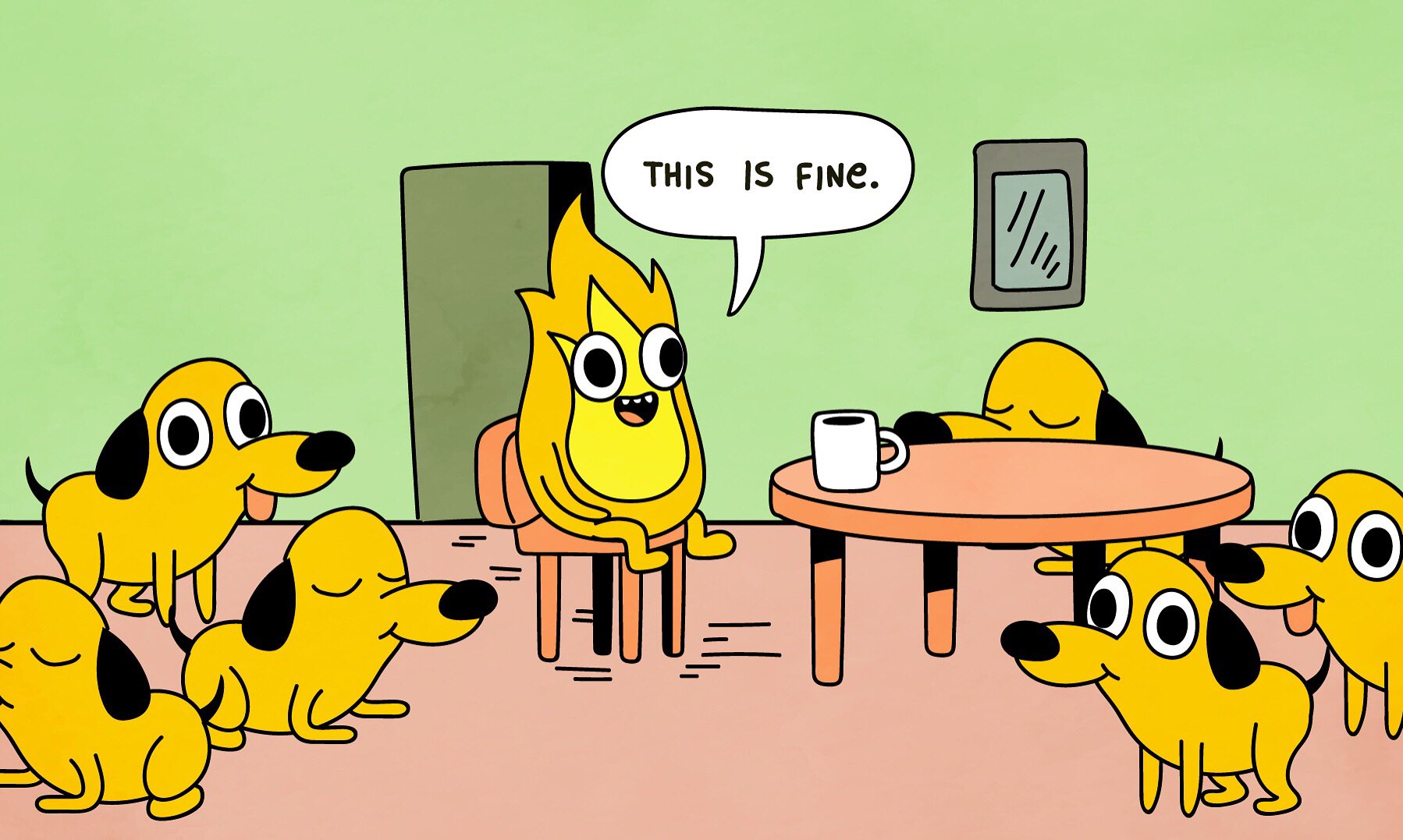
Interestingly this is not the first time we're being told things are fine when actually everything is on fire. Let's explore a few:
Leaded gasoline caused 900.000 deaths and neuroloical issues in millions
This probably won't come as news, but leaded gasoline is bad for you.
The first indication that leaded gasoline wasn't great was in 1924 when workers started gruesomely dying of neurological damage. It wasn't until the 1970s (that's nearly 50 years later) that legislation started coming in to stop its use. This delay wasn't because of a lack of proof, or because people loved being poisoned so much. It was because stakeholders (i.e. General Motors, Standard Oil, and Ethyl Corporation) were actively suppressing and down-playing the problem.
A great write-up can be found at EnvironmentalHistory.org
Tobacco still kills 8.7 million people every year
In the 1940s research started coming out linking smoking tobacco to lung cancer. By the 1950s it was well-known among scientists and researchers. It took until 1964 before the first government started restricting tobacco in some way. Again, stakeholders (i.e. tobacco companies) made huge efforte to confuse the facts, suppress research and lobby and/or sue governments. And while this has stopped in most 'western' nations, there are still parts of the developing world where Big Tobacco is still suing governments and spreading misinformation to keep selling their poison. (e.g. Philip Morris v Uraguay, Philip Morris v Australia, BAT v Uganda)
The ad-industry
This playbook isn't new, it's just history repeating itself. There is a massive amount of money is the ad-industry, so there is great incentive to make sure the money keeps flowing. I strongly believe we are now in this in-between period where the information is available, but corporate greed is using every trick in the book to make sure nothing stops the gravy train. These tricks include:
- lying about the facts
- confusing the facts
- burying the facts
bribinglobbying politicians- suing governments
So if smoking causes lung cancer and loaded gasoline makes your brain melt, what do ads do?
Ads shape your opinions
When we are exposed to an idea enough times, we will start accepting it as truth.
This is known as the Illusory Truth Effect. And as we become more familiar with an idea, we will start to like it more. This is known as the Mere Exposure Effect. This is human nature. We all suffer from this. And marketers know this. This is why:
- we drink sodas all day. Because The Coca Cola Company made us believe that was normal;
- we think diamonds are necessary for engagements. That's just the De Beers company;
- we believe "Breakfast is the most important meal of the day". That's a marketing slogan from Kelloggs that is not based on any science;
- we believe "halitosis" is a thing. This is an obscure medical term co-opted by Listerine. Any dentist will tell you mouthwash is not a necessary part of oral hygiene.
The list goes on, but you get the gist.
Well, now we live in a world with so many different ways to hyper-target any demographic, that threshold of "enough times" can be achieved by anyone with enough money.
So if you need to convince people that some politician is the incarnation of Jesus himself; or that some minority group is evil; or that workers unions are bad for workers, the answer is simple: Just dump enough money into marketing. Hit people with hyper-targeted ads, on every platform, in every app, on the streets, on the side of trucks and buildings, until they start buying what you're selling. Whether that is a product or an idea.
Ads make you feel bad about yourself
Do you happen to be a person that has insecurities? Cool! Welcome to life! Well, if they show us ads and content that makes us sad, you'll be likely to stay on your screen longer rather than do something helpful. Which means they can show you more ads that make you sad.
"You need botox. And a nose job. And fake boobs. And penis filler. And your socially awkward. Look at how beautiful and great all these people are in the ad! You disgust me. But buy our completely unnecessary product, and you can be beautiful and perfect too!"
One ad for a beauty product might not make much of an impact on you. But when you’re constantly exposed to the idea of needing some part of you fixed, over and over again, it starts to settle in.
Ads can lead you to cyber criminals
While Google and Meta claim to check every ad they serve, it still happens every day that ads are served with malware in them. This category of ads is called "malvertising". This can include scams, phishing attempts, malware downloads, and sometimes even direct browser exploits that can steal your data without you even needing to click on them.
Ads are the driving force behind the attention economy
The reason social media sites are so addictive, is because they have to be. The more you look at your screen, the more ads they can show, the more money they make. Nowhere in this do they consider you or your well-being. You are but an animal to be milked for attention until you literally want to kill yourself. This was one of the key findings in "The Facebook Papers" in 2021. Many users of platforms such as Instagram experience more depression and even suicidal ideation.
If showing ads was not an effective way to make money, these companies would have to find other ways to make money. Perhaps even ways that don't exploit their users.
A little capitalism interlude
I understand that this article comes off as "Capitalism bad!", so let me push back a bit.
I don't have a problem with capitalism. I don't mind free markets. In fact, I think they are good. And I understand that for a free market to function, you need some level of advertisement for new players and products to announce themselves. I believe competition drives innovation, and keeps prices down. And those things are good for people.
However, unregulated capitalism is a different beast. There is no free market when there are only monopolies—almost every industry is dominated by 2 or 3 big companies. The consumer has no choice if the only alternative is alienation: "I'd quit Facebook, but I wouldn't be able to talk to my friends".
If you can thrive as a company because you have created something that people want to use and are willing to spend their hard-earned cash on, then power to you. If the only way you can succeed is by exploitation and manipulation, then maybe you're a sociopath and the world is better off without you.
If your product wouldn't work if people had to pay for it, then your product is bad.
Fight me on that one.
So what do we do?
Okay, cool. Ads are bad. Now what?
Turn off personalized ads. This is so important. Without personalized ads, they cannot target you. An ad on some random crypto game is a lot less likely to influence you than an ad on that beauty brand you like, or that politician you feel strongly about. Here's a decent guide!
Pay for ad-removals. Whenever possible pay (if the service and your wallet allows it). Paying for the privilege of not being marketed to is great. Don't pay for less ads tho. Pay for no ads. Or don't pay.
Install an ad-blocker. Specifically ublock origin. It's free and open source! This will immediately remove all ads from your browser. There are also mobile ad blockers available. An article about that will be posted here at some point. Brave Browser is pretty good for mobile. (also free!) If you go with any other software, make sure you research them before installing. There are more quite a few "privacy tools" out there that are actually malware. But Ublock Origin and Brave are legit (at the time of writing).
Get off your phone! A lot of the stuff we consume, we really don't need. Sure some social media might be a good distraction from the drudgery of life, but keep it short. We don't need to watch 4 hours of videos every day. Get a book. Take a walk. Touch some grass. Talk to a friend (in real life).
And just generally be more mindful about ads. Be aware how many there are. How they are trying to manipulate you. And of course tell others about this site.
I believe we can change the world
I want to end on a somewhat positive note. Ads are everywhere. No one likes them. They are harmful. This sucks.
But we can change things. At the end of the day the value is extracted from us. If we resist that extraction, then there is no value.
We can increase our awareness of when we see ads and how we interact with them. We can block them. We can pay for their removal. We can choose not to use a product if it's too invasive.
At the end of the day the thing that matters is you and your experiences. Go outside, touch grass. Share stories with a friend. Put the phone down. Experience life.